
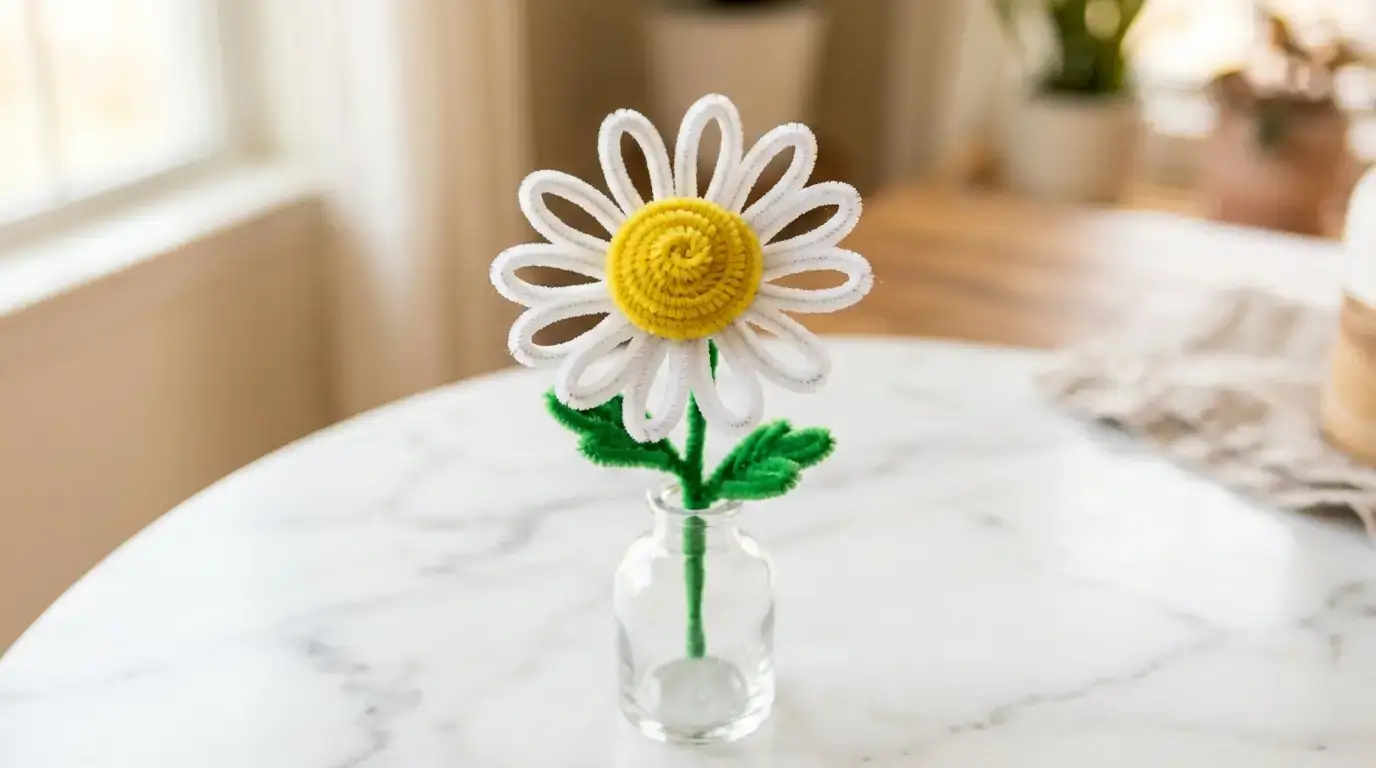
If you’ve ever wanted to create a cheerful, long-lasting flower craft that brightens any room, the pipe cleaner daisy flower is the perfect project to try. Whether you’re crafting with kids on a rainy afternoon or making handmade decorations for your home, this simple yet stunning DIY daisy takes just a few minutes and requires minimal supplies.
In this complete tutorial, you’ll learn exactly how to make a pipe cleaner daisy flower from scratch, along with tips to customize colors, sizes, and arrangements. Let’s get started!
📄 Get the Free Step-by-Step PDFWhat Is a Pipe Cleaner Daisy Flower?
A pipe cleaner daisy flower is a handmade craft flower created by shaping chenille stems (commonly known as pipe cleaners) into the classic daisy form — a ring of elongated petals surrounding a round center. Unlike real daisies that wilt within days, these handmade flowers can be reused when stored dry and handled gently, making them ideal for decorations, gifts, and classroom projects.
The beauty of the pipe cleaner daisy lies in its simplicity. The version below uses five full-length chenille stems for the flower and stem, plus an optional extra green stem for a leaf. And because pipe cleaners come in every color imaginable, you can design daisies in classic white-and-yellow or go bold with vibrant rainbow palettes.
If you’re new to pipe cleaner flower crafting, daisies are one of the best flowers to start with because their shape is forgiving and the technique is easy to master.
Materials You’ll Need
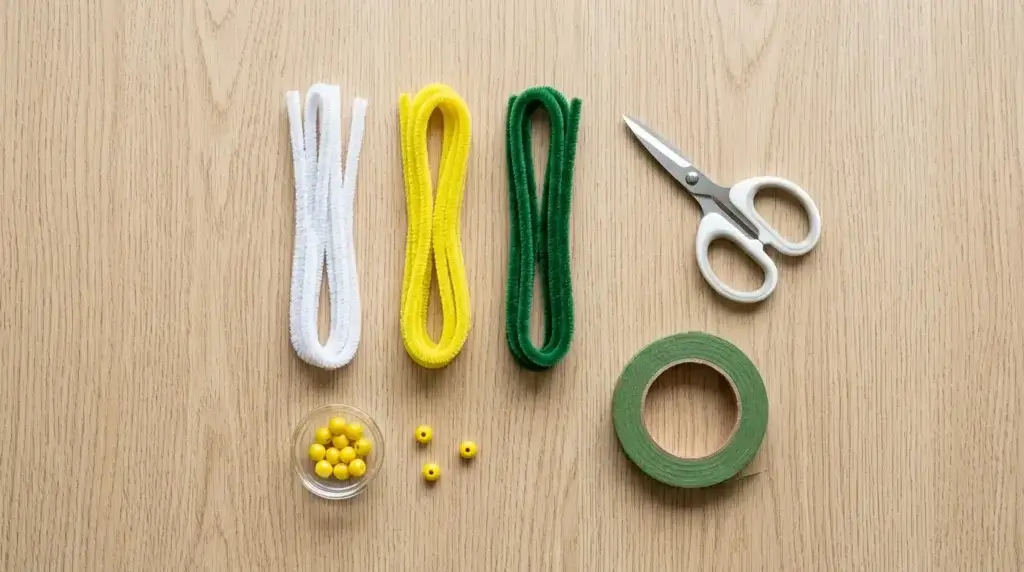
Before you begin making your pipe cleaner daisy flower, gather these basic supplies:
- White pipe cleaners (3 per daisy for petals)
- Yellow pipe cleaners (1 per daisy for the center)
- Green pipe cleaners (1 for the stem, plus 1 optional extra for a leaf)
- A ruler and a cutting tool suitable for thin chenille-stem wire, handled by an adult if trimming is needed
- A pencil or dowel (for shaping petals)
- Hot glue gun (optional, for extra hold)
All materials are affordable and available at any craft store. For a classroom setting, consider buying pipe cleaners in bulk — you can check out our guide on pipe cleaner flowers for classroom decoration for quantity planning tips.
Step-by-Step Tutorial: Making Your Pipe Cleaner Daisy Flower
Follow these simple steps to create your own beautiful pipe cleaner daisy flower.
Step 1 — Create the Petals
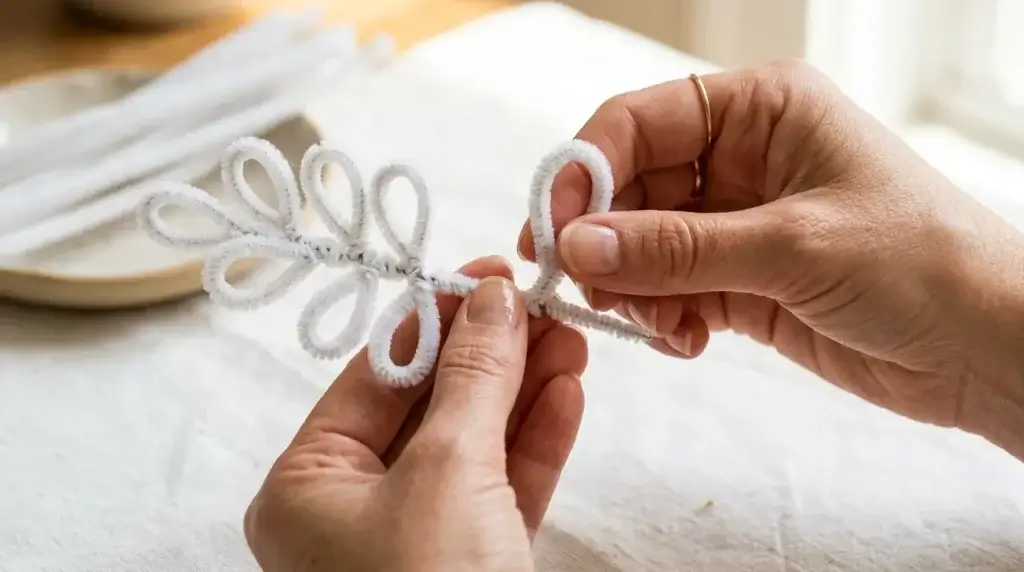
Use a white chenille stem about 30 cm long. Starting near one end, bend a narrow loop about 3 cm long, then twist at its base to hold it closed. Form two more loops beside it, bringing each base back to the same cluster. Keep a short tail for joining. Avoid folding the whole stem in half before making the loops.
Repeat with two more white stems to make three groups of three loops: nine petals in total. Keep the loop sizes similar. If you want more petals, add another white stem and include it in your supply count.
Pro tip: Wrap each loop around a pencil before twisting to get perfectly uniform petals.
Step 2 — Arrange the Petals Into a Ring
Twist the bases of all your petal sections together at a single central point. Spread the petals evenly in a circle, adjusting them so they fan out flat like a real daisy bloom.
If a petal group moves, tighten its base twist or wrap a short extra chenille stem around the join. Count this additional stem if needed. For this basic version, mechanical wraps hold the flower together without hot glue.
Step 3 — Make the Yellow Center
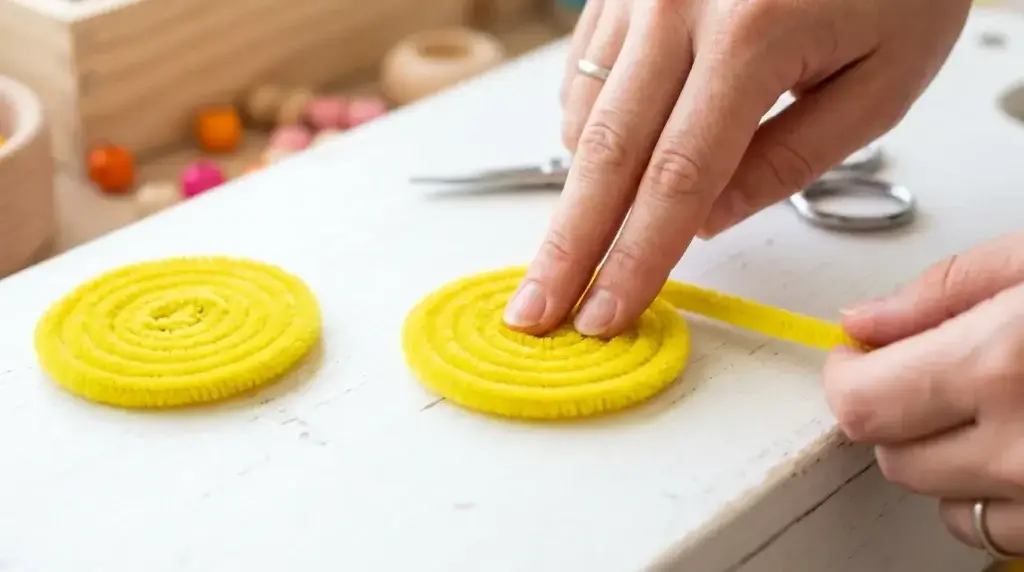
Take a yellow pipe cleaner and coil it tightly into a flat spiral disc. Start by making a tiny loop at one end, then wrap the rest of the stem around it. The finished center should be about 1.5 to 2 cm in diameter.
Reserve about 3 cm of the yellow stem as an attachment tail before finishing the spiral. Pass that tail through the gap in the petal ring and wrap it around the gathered white bases at the back. Press the spiral flat against the petals and tuck the tail inward.
Step 4 — Attach the Stem
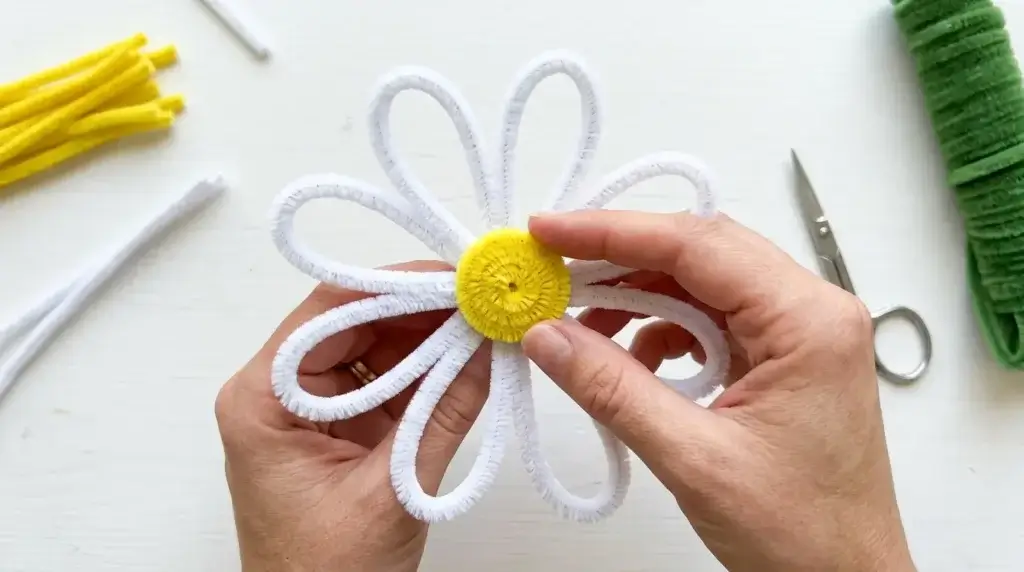
Take a green pipe cleaner and push one end through the back of the flower center. Twist it a couple of times to secure it firmly. This green stem gives your pipe cleaner daisy flower a natural, finished look.
Step 5 — Add Leaves (Optional)
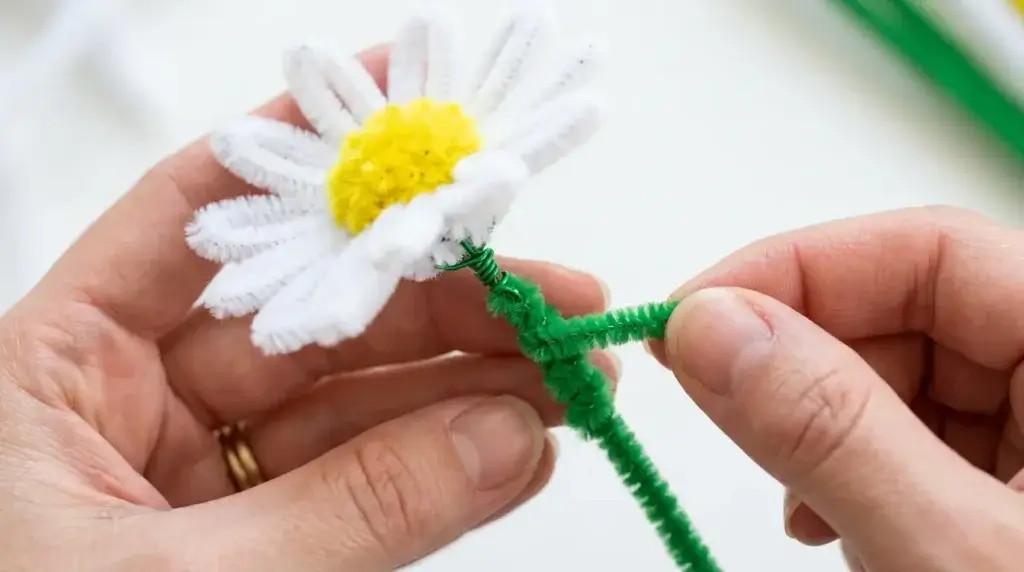
To make a leaf, fold a small section of green pipe cleaner into an elongated loop and twist it closed at the base. Attach it to the stem by wrapping it around once. One or two leaves are enough for a realistic touch.
Tips for Realistic-Looking Petals
Making your pipe cleaner daisy flower look as lifelike as possible comes down to a few small details:
Shape matters. Real daisy petals are slightly rounded at the tip and narrow at the base. When forming your loops, gently pinch the tip into a soft point instead of leaving them perfectly round.
Vary the length slightly. In nature, not every petal is identical. Making a few petals slightly shorter or longer adds an organic, authentic quality to your flower.
Layer your petals. For a more dimensional look, create two rings of petals — a larger outer ring and a slightly smaller inner ring. Offset them so the inner petals peek out between the outer ones. This technique works beautifully for simple pipe cleaner flower ideas across many flower types.
Creative Variations and Color Ideas
Once you’ve mastered the basic white-and-yellow pipe cleaner daisy flower, try these fun variations:
Gerbera-style daisy. Use orange, pink, or red pipe cleaners for the petals and a dark brown center. Gerbera daisies have shorter, wider petals, so make your loops a bit wider and rounder.
Mini daisy. Cut your pipe cleaners in half before starting. The smaller scale creates adorable tiny daisies perfect for jewelry, hair clips, or card embellishments.
Two-tone petals. Twist a white and a light pink pipe cleaner together before forming your petal loops. The result is a delicate, ombré-style petal that looks stunning.
Wildflower daisy. Use lavender or pale blue for the petals with a bright yellow center to mimic wild aster flowers.
These variations also make excellent additions to a pipe cleaner flower bouquet when mixed with other flower types like roses and tulips.
How to Display Your Pipe Cleaner Daisy Flowers
A single pipe cleaner daisy flower is charming on its own, but grouping several together creates a truly eye-catching display. Here are some popular display ideas:
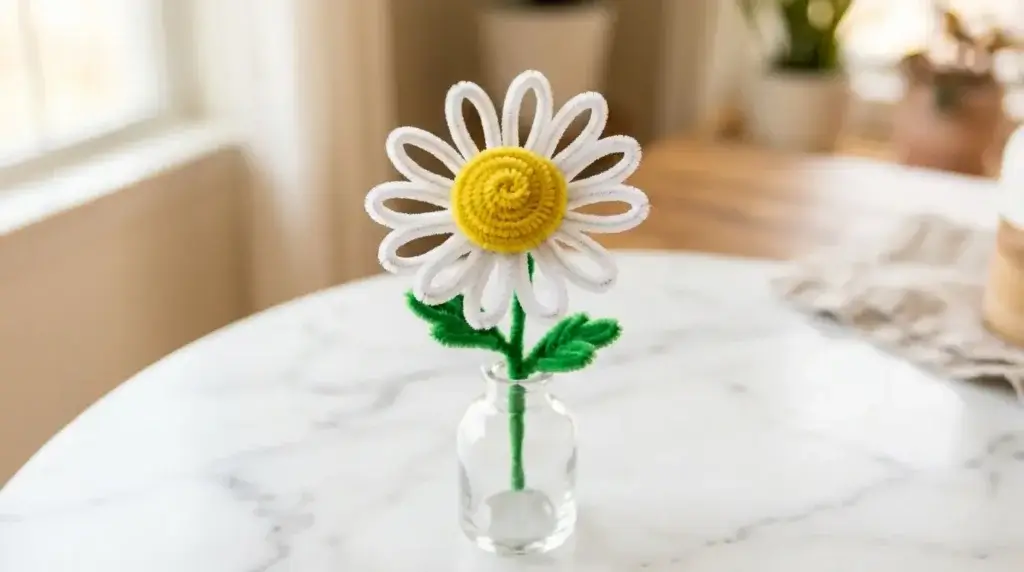
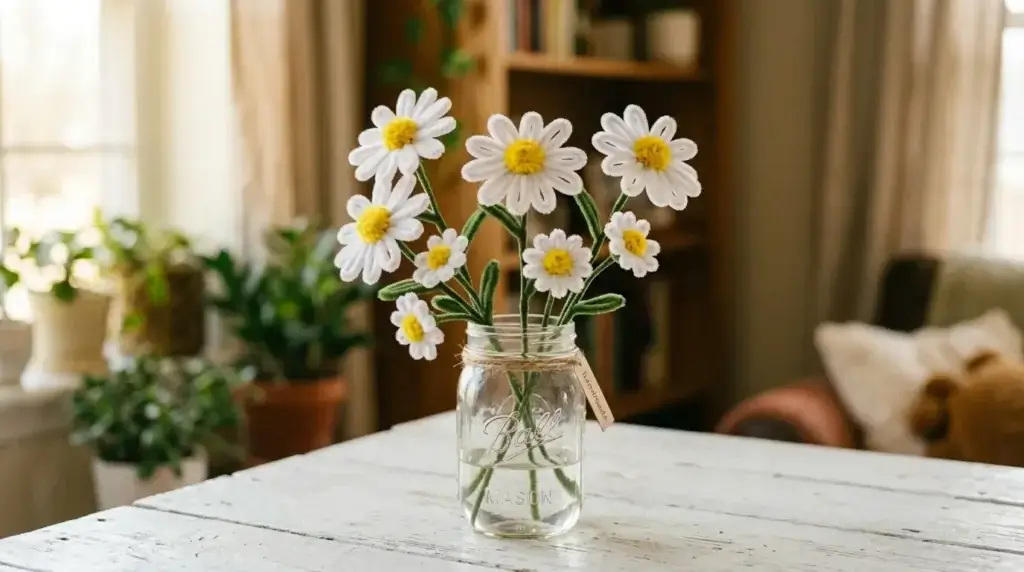
Mason jar bouquet. Place 5 to 7 daisies of varying heights in a mason jar filled with decorative pebbles or dried moss. This makes a lovely centerpiece for kitchen tables or shelves.
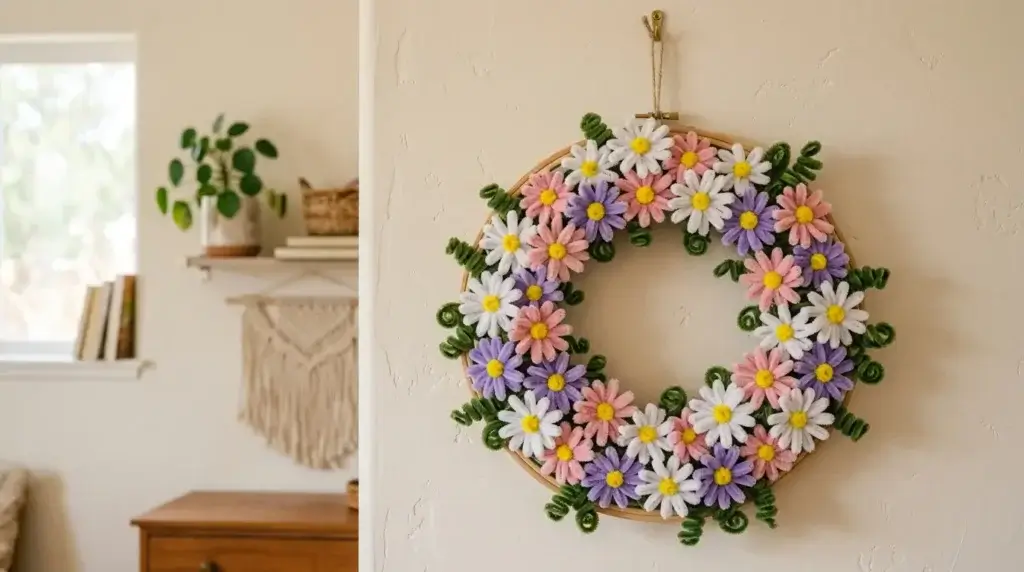
Wall art. Attach pipe cleaner daisies to a canvas or picture frame for unique flower wall decoration. Hot glue works well for this purpose.
Small arrangements. Combine your daisies with other pipe cleaner flowers for charming small pipe cleaner flower arrangements for home decor. A mix of daisies, roses, and lavender stems looks especially beautiful.
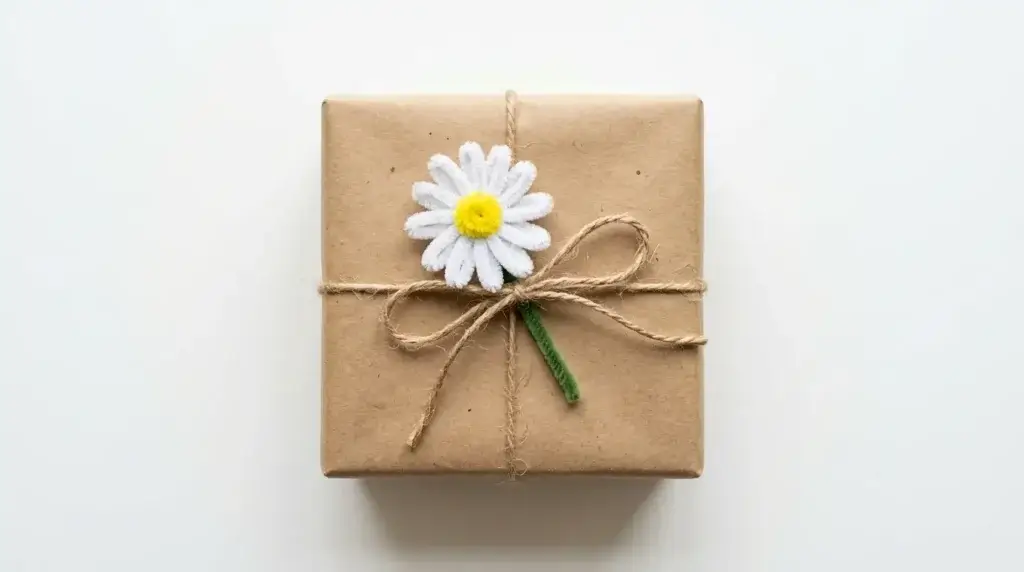
Gift toppers. Attach a single daisy to a wrapped gift instead of a bow. It doubles as a keepsake the recipient can keep long after the gift is opened.
Why Pipe Cleaner Daisies Are Perfect for Kids
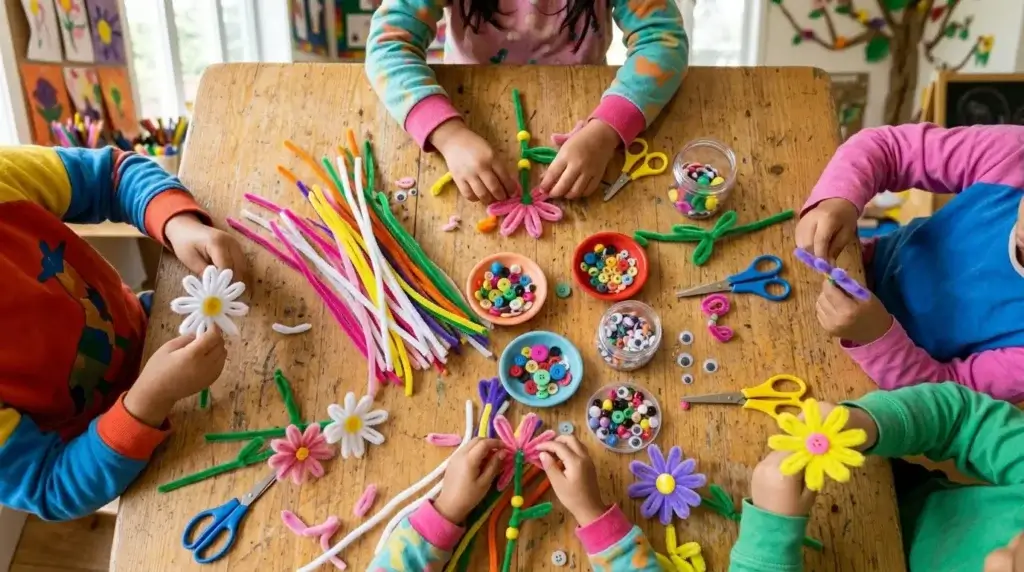
The pipe cleaner daisy flower is one of the most kid-friendly craft projects you can find. Here’s why parents and teachers love it:
Adult supervision. The main petal loops use full-length stems. Adults should handle any trimming and check that wire tips are tucked inward before children handle the finished flowers.
Instant gratification. Unlike crafts that require drying time or multiple sessions, a pipe cleaner daisy comes together in about 10 minutes.
Builds fine motor skills. The twisting, looping, and shaping movements help develop hand strength and coordination in young children.
Endlessly customizable. Kids get to choose their own colors and petal counts, which encourages creativity and self-expression.
For more kid-friendly projects using chenille stems, browse our full guide on easy pipe cleaner flowers for kids.
Frequently Asked Questions
How many pipe cleaners do I need to make one daisy?
Use three white 30 cm pipe cleaners for nine loop petals, one yellow for the center and one green for the stem: five in total. Add a sixth green stem for an optional leaf, and extra white material if you add another petal layer.
Can I use the pipe cleaner daisy flower for outdoor decor?
Pipe cleaner flowers are best suited for indoor use. Chenille stems can fade in direct sunlight and lose their shape in rain. If you want to display them outdoors temporarily, choose a covered, shaded spot.
What age is appropriate for this craft?
Children who can fold and twist chenille stems can try the loops with adult supervision. Adults should handle cutting, hot glue if used for a separate display, and checks for exposed wire ends. Suitability depends on the child and the tools used.
How do I make my pipe cleaner daisy look more realistic?
Focus on petal shape variation, add a second layer of petals, and use a slightly fuzzy yellow center. Bending each petal gently upward at the tip also mimics the natural curl of real daisy petals.
Can I make a pipe cleaner daisy flower bouquet as a gift?
Absolutely! A bouquet of 5 to 10 handmade daisies wrapped in tissue paper or placed in a small vase makes a thoughtful, personalized gift that never wilts. Check out our pipe cleaner flower bouquet ideas for more inspiration.
Looking for more flower crafting inspiration? Explore our complete collection of pipe cleaner flower tutorials and discover dozens of easy, beautiful designs you can make at home. Free pipe cleaner flowers printable instructions PDF — download and print all 10 flower tutorials for free. Download the free pipe cleaner daisy PDF guide — print and keep the full step-by-step tutorial
1 thought on “How to Make a Pipe Cleaner Daisy Flower: Easy Step-by-Step Guide”