
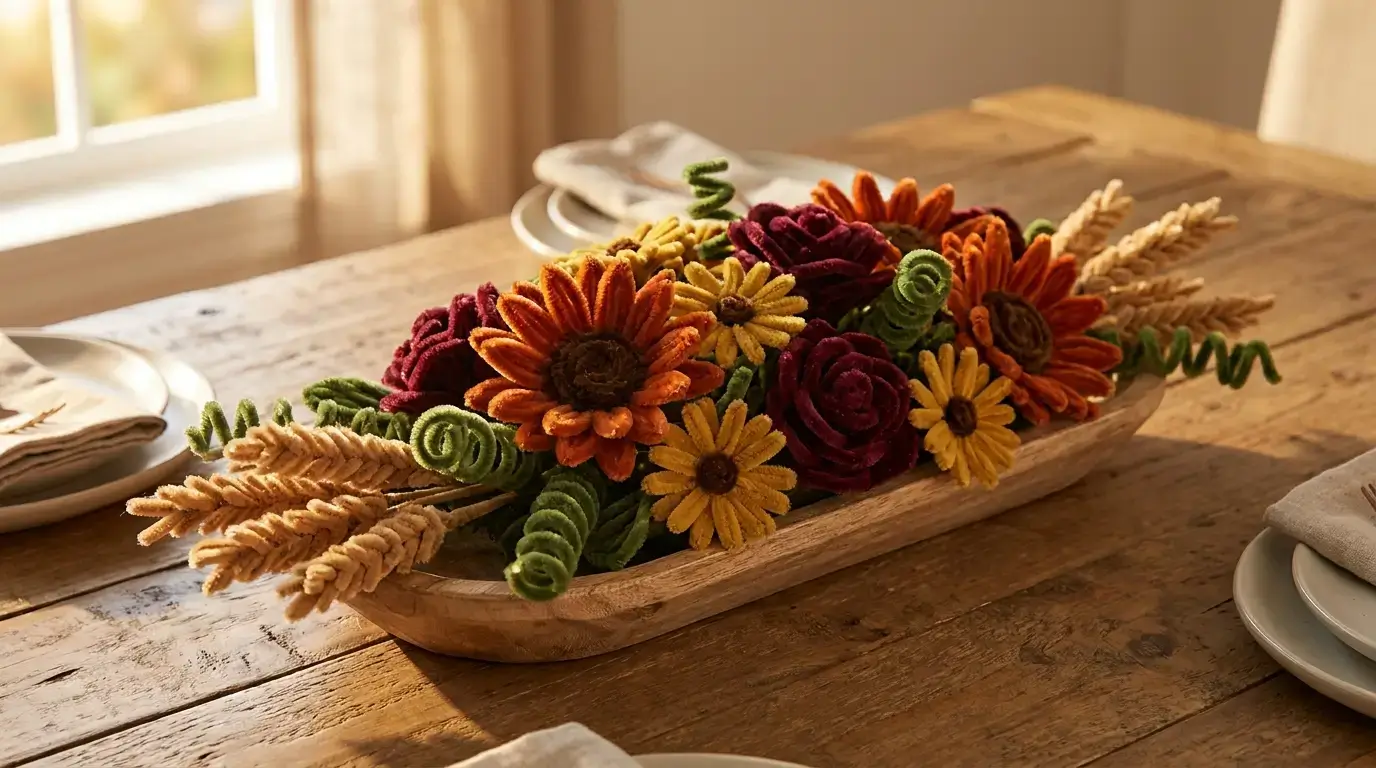
Real fall centerpieces are gorgeous — and gone in a week. Pumpkins soften, mums wilt, and by Thanksgiving dinner your beautiful autumn arrangement often looks tired. A pipe cleaner harvest centerpiece solves that completely: the same warm rust, burgundy and gold palette you love, built to last through the entire season without a single wilted petal.
This guide builds on our pipe cleaner flower centerpiece guide with a dedicated autumn palette, a few harvest-specific touches (wheat stems, mini pumpkins), and ideas made specifically for Thanksgiving tables and fall home décor.
📄 Get the Free Harvest Centerpiece PDFWhat You Need
Materials:
- Burnt orange, rust, and burgundy pipe cleaners—for sunflowers and roses
- Dark brown pipe cleaners—for sunflower centers
- Mustard yellow pipe cleaners—for accent daisies
- Dark green pipe cleaners—for stems and leaves
- A few strands of raffia or dried wheat (real or faux)—for texture
- A low, wide container—a wooden bowl, a low ceramic dish, or a hollowed mini pumpkin
- Floral foam, pebbles, or rice — to anchor the stems
Cost: $5–8 for a full centerpiece Time: 45–60 minutes
Step-by-Step: Building the Harvest Centerpiece
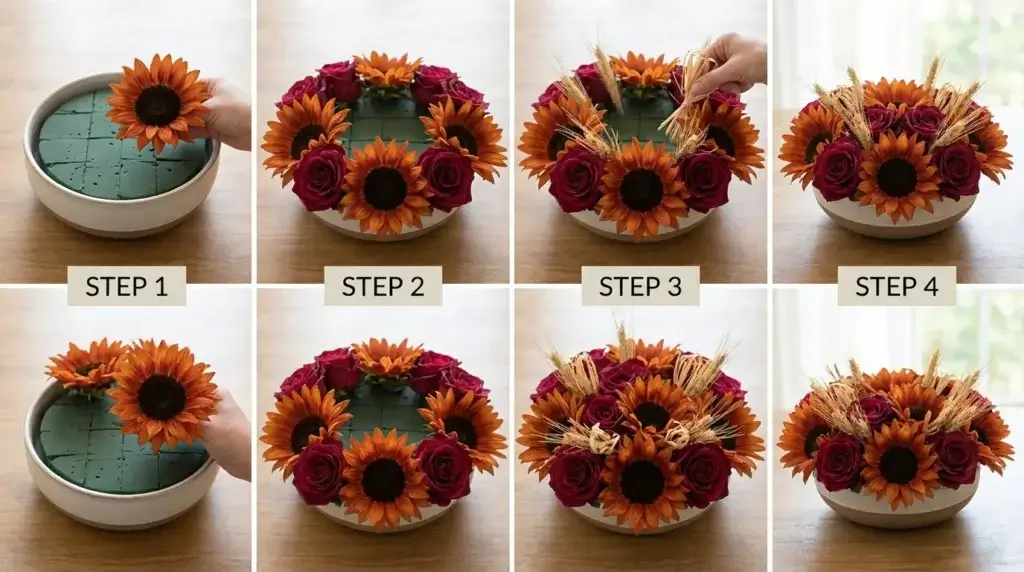
Step 1—Make your hero flowers.
Make 4–5 rust or burnt orange sunflowers using our pipe cleaner sunflower tutorial — the Sunset Orange or Burgundy Harvest variation works best here. These are your tallest, most eye-catching flowers.
Step 2 — Make your medium flowers
Make 4–6 burgundy pipe cleaner roses using our pipe cleaner rose tutorial, plus 3–4 mustard yellow daisies for warmth and contrast.
Step 3 — Anchor your container
Fill your low, wide container two-thirds full with floral foam, pebbles, or rice — the same anchoring technique as our regular centerpiece guide. If using a hollowed mini pumpkin, line the inside with a small plastic cup before adding the anchor material.
Step 4 — Build the outer ring
Push your daisies and roses around the outer rim first, angling them slightly outward. This creates the low, wide silhouette every good centerpiece needs.
Step 5 — Add the sunflowers
Place your sunflowers toward the center, standing slightly taller than the outer ring but staying under 35 cm total height so guests can see across the table.
Step 6 — Add harvest texture
Tuck a few strands of raffia or dried wheat low around the base, between the flowers. This single touch is what makes the arrangement read as “harvest” rather than just “colorful flowers.”
Step 7 — Final check
Walk around the table (or spin the container) and fill any visible gaps with a leaf or small daisy. Check the height from a seated position one final time.
Harvest Color Palettes to Try
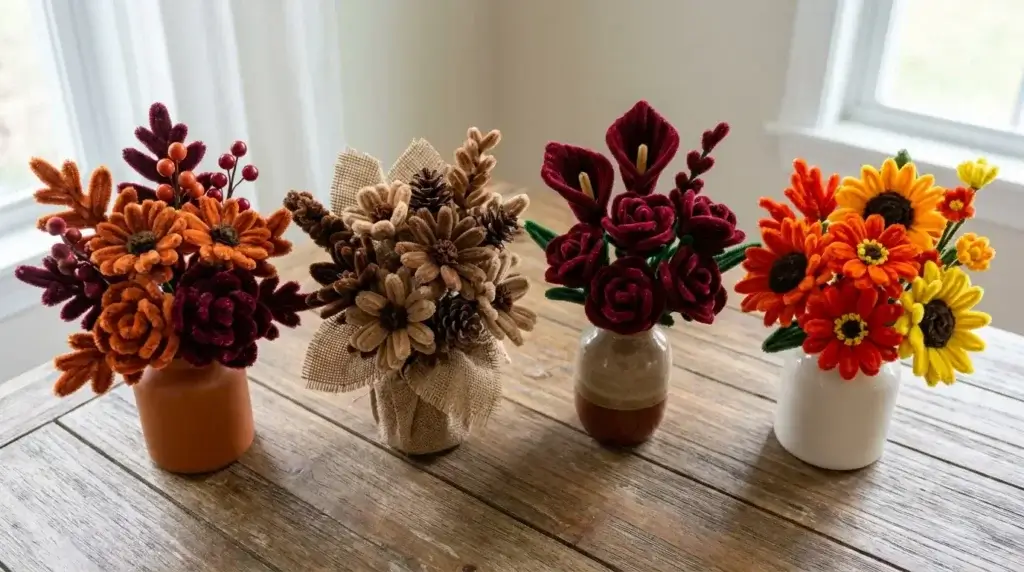
- Classic Thanksgiving: burnt orange + burgundy + mustard yellow + dark green
- Rustic Farmhouse: all rust and brown tones with raffia and wheat accents, no bright colors
- Elegant Autumn: deep burgundy roses only, with gold pipe cleaner accents woven in
- Warm & Bright: orange sunflowers + red roses + yellow daisies, for a cheerful, high-contrast look
Where to Use Your Harvest Centerpiece
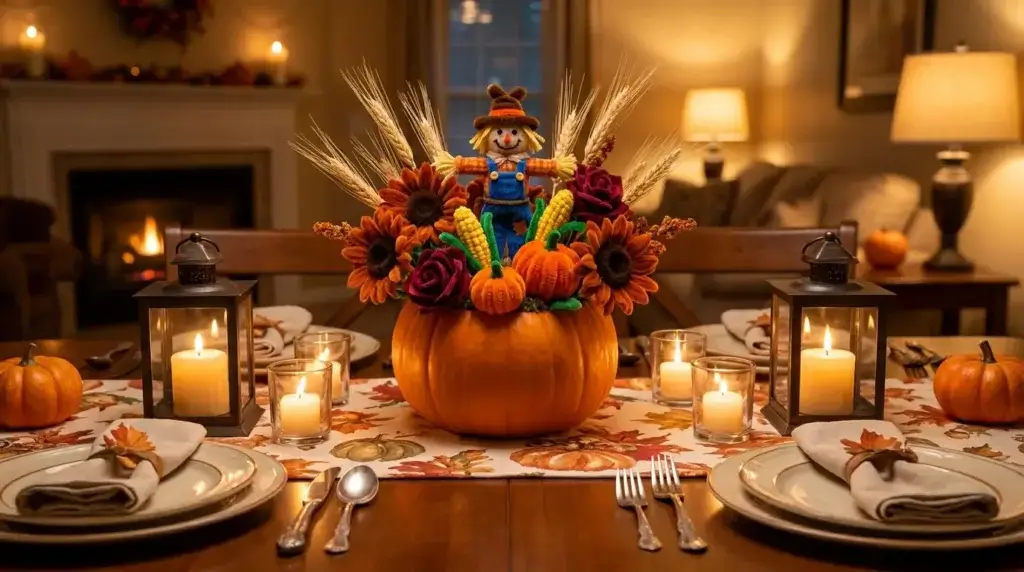
- Thanksgiving dinner table — the main event; pairs beautifully with a mini pumpkin container
- Fall mantel display — flanked by two matching mini arrangements
- Front porch table — since it never wilts, it can sit outside for the whole season
- Autumn dinner party — a lower-height version works well alongside candles
Tips for a Harvest-Ready Look
- Lean into warm tones — rust, burgundy, mustard, and brown read as “fall” far more than red or pink.
- Raffia and wheat are the detail that sells it — don’t skip this step even if you’re short on time.
- A mini pumpkin container instantly adds seasonal context — even a plain flower arrangement looks “fall” in a pumpkin.
- Make it weeks before Thanksgiving — since it never wilts, there’s no reason to wait until the last minute.
FAQ
Can I make this without glue?
Yes — every element, including the wheat accents, is added by tucking and twisting, no glue required.
Can I reuse my regular centerpiece flowers for this?
Not directly — the palette matters a lot here. Swap in rust, burgundy, and mustard pipe cleaners rather than reusing pastel or bright spring colors.
How far in advance can I make this?
Weeks in advance — pipe cleaner centerpieces don’t wilt, so you can build it in October and have it ready well before Thanksgiving.
Can I use a real mini pumpkin as the container?
Yes — hollow it out, line the inside with a small plastic cup or bowl, and fill with your anchoring material as usual.
Conclusion
A fall harvest centerpiece is one of the best examples of where pipe cleaner flowers genuinely beat the real thing — the same rich autumn colors, ready weeks ahead, and still looking perfect through the last slice of pie.
More guides you’ll love: