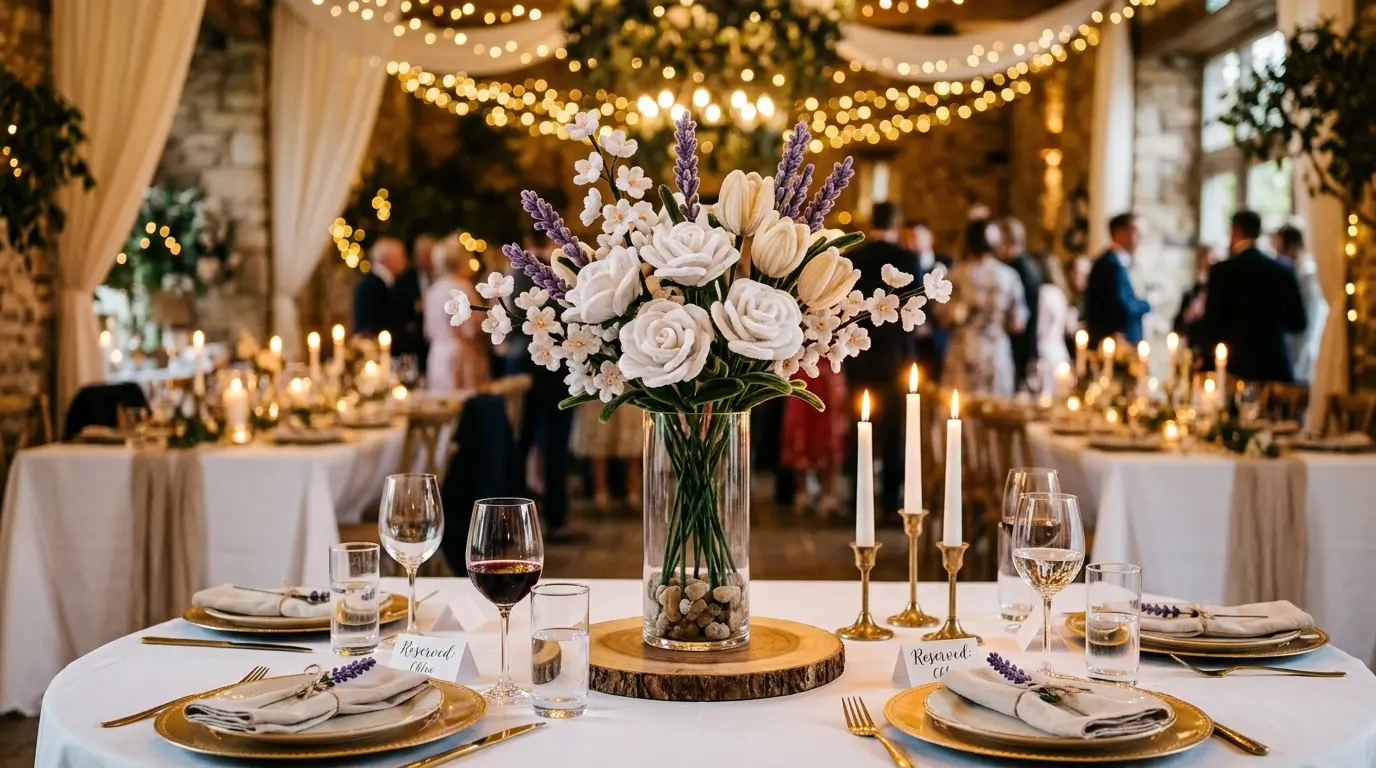
Pipe cleaner wedding flowers are one of the most beautiful secrets in DIY wedding planning — and one of the most underused.
A professional florist can charge $2,000–5,000 for wedding flowers. A pipe cleaner wedding flower setup that looks just as elegant can be made for under $100 in materials, lasts forever as a keepsake, and gives the wedding a personal, handmade quality that no florist arrangement ever could.
This guide covers everything you need to plan and make pipe cleaner wedding flowers for your entire day — from the bridal bouquet to the reception centerpieces, table settings, flower girl crowns and aisle decorations.
All white and ivory. All elegant. All made by hand.
💒 New to pipe cleaner flowers? Start with the individual flower tutorials before tackling wedding arrangements — pipe cleaner rose, pipe cleaner tulip and lavender pipe cleaner flowers are the three core wedding flowers.
Why Choose Pipe Cleaner Wedding Flowers
Before the tutorials, here’s the honest case for choosing handmade pipe cleaner flowers for a wedding:
Cost. A professional wedding flower package costs $2,000–5,000+. A complete pipe cleaner wedding flower setup — bouquet, centerpieces for 10 tables, flower girl crowns, aisle decorations — costs $50–100 in materials. The saving is real and significant.
Lasting keepsake. Real flowers are thrown away after the wedding. Pipe cleaner flowers last forever. The bridal bouquet becomes a permanent decoration. The centerpieces become home décor. The flower girl crown is kept for years.
Zero stress on the day. Real flowers need a florist delivery on the morning of the wedding — a high-pressure logistics moment. Pipe cleaner flowers are made in advance, stored perfectly, and require no day-of coordination.
Completely personal. You choose every color, every flower type, every arrangement style. The flowers match the dress, the venue, the invitations — with precision no florist can offer.
Zero wilting. Real wedding flowers start wilting within hours of the ceremony. Pipe cleaner flowers look exactly the same in the ceremony photos at 11am as they do in the dancing photos at midnight.
The Wedding Flower Palette
For most weddings, one of these three palettes covers everything:
Classic White & Ivory White roses + ivory tulips + white cherry blossoms + pale lavender + silver-grey filler. The most timeless and universally flattering wedding palette. Works in every venue.
Blush & White Blush pink roses + white daisies + pale pink tulips + white lavender + sage green leaves. Romantic, feminine and very popular for spring and summer weddings.
White & Gold Pure white roses + white wildflowers + white cherry blossoms + small gold-painted pipe cleaner accents. The most dramatic and luxurious-looking option. Perfect for evening receptions.
What You Need — Full Wedding Flower Shopping List
For a complete wedding of 10 tables + 1 bridal bouquet + flower girl crowns + aisle decor:
Pipe cleaners:
- 200 white pipe cleaners — roses, tulips, daisies, cherry blossoms
- 100 ivory/cream pipe cleaners — filler flowers and variation
- 100 green pipe cleaners — all stems and leaves
- 50 purple/lavender pipe cleaners — lavender sprigs
- 20 pale pink pipe cleaners — for blush accents if using blush palette
Display materials:
- 10 clear glass cylinder vases — for table centerpieces
- 1 slim tall vase — for the bridal bouquet
- 10 small glass jars or bud vases — for aisle decorations
- White decorative pebbles or sand — for vase anchoring
- Green floral tape — for bouquet bundling
- White satin ribbon — for bridal bouquet stems
- Jute twine — for rustic-style arrangements
Total estimated cost: $60–100 depending on pipe cleaner brand and vase sourcing
Dollar Tree, Hobby Lobby and Michaels are the most cost-effective sources for both pipe cleaners and vases.
Timeline: When to Make Everything
Wedding flowers cannot be rushed. Here’s the ideal production timeline:
8 weeks before: Order all pipe cleaners and test your color palette. Make 5 test flowers. Confirm the arrangements look right with your venue colors.
6 weeks before: Make all individual flowers — roses, tulips, lavender sprigs, cherry blossoms. Store in labeled boxes by type and color.
4 weeks before: Assemble all 10 table centerpieces. Store upright in their vases (without pebbles) wrapped in tissue paper.
2 weeks before: Make flower girl crowns. Make aisle jar arrangements. Make any hair accessories.
3 days before: Final assembly of bridal bouquet. Add pebbles or sand to all vases. Do a full venue mock-up with one complete table setting.
Wedding day: Deliver and place — zero floristry stress.
The Bridal Bouquet
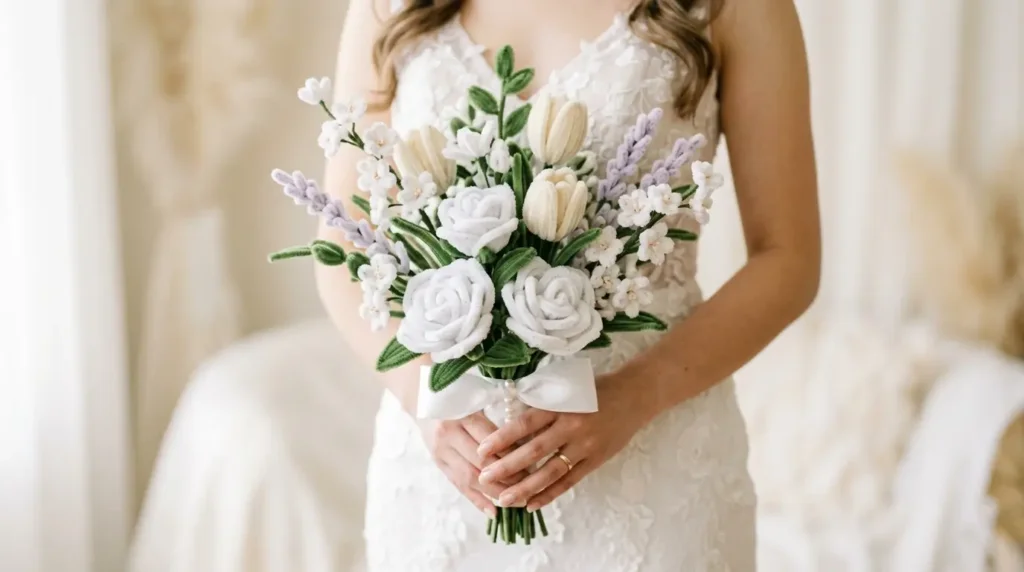
The bridal bouquet is the most photographed wedding flower. It appears in hundreds of photos across the ceremony and reception — and unlike real flowers, a pipe cleaner bouquet looks exactly the same in every single one.
What to make for the bridal bouquet
A classic round bridal bouquet contains 12–15 flowers:
- 5 white roses (the statement flowers — full coil method)
- 3 ivory tulips (elegant height variation)
- 3 white cherry blossoms (delicate filler)
- 2 pale lavender sprigs (color accent and height)
- 2–3 green leaf sprigs (finishing detail)
For the rose tutorial see our pipe cleaner rose guide, for the tulip see our pipe cleaner tulip guide, and for the lavender see our lavender pipe cleaner flowers guide.
How to assemble the bridal bouquet
Step 1: Make all flowers with double-twisted stems at least 20 cm long.
Step 2: Arrange in your hand — roses at the back, tulips in the middle, cherry blossoms and lavender in front and between. The classic round dome shape.
Step 3: Bundle all stems together with floral tape from 7 cm below the lowest flower head downward to the stem base.
Step 4: Wrap the bundled stem section with white satin ribbon, starting from the top of the floral tape down to the stem base. Secure with a hidden pin or twist of thin wire. Finish with a ribbon bow at the top of the handle.
Step 5: Trim all stem ends to the same length. The handle should be about 15 cm — long enough to hold comfortably, not so long it appears in photos awkwardly.
Bridal bouquet tips
- Make it slightly bigger than you think — bouquets always look smaller in photos than in person
- Test the weight — hold it for 10 minutes before the wedding. If your arm tires, remove 2–3 flowers
- Practice the hold — hold at hip level with both hands, elbows slightly bent, tilted 10 degrees forward. This is the most flattering angle in photos
- Make a second smaller version — a bridesmaid bouquet uses the same flowers in a smaller format (7–9 flowers)
Wedding Table Centerpiece
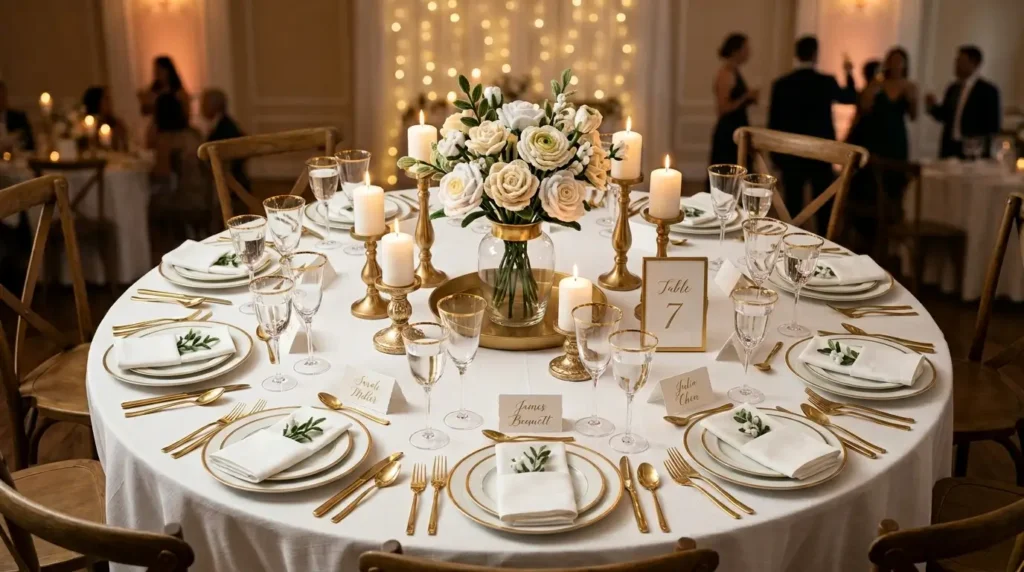
The table centerpiece is what guests stare at during dinner. It needs to be beautiful, proportionate to the table size, and low enough not to block conversation.
Standard centerpiece for a 6–8 person round table
Flowers needed per centerpiece:
- 4 white roses
- 3 ivory tulips
- 3 white cherry blossoms
- 2 lavender sprigs
- 3 green leaf sprigs
- Total: 15 flowers per table
Vase: Clear glass cylinder, 20 cm tall, 8 cm diameter. Fill the bottom 12 cm with white decorative pebbles or sand.
Assembly: Make all flowers with 25–30 cm stems. Bundle loosely — the arrangement should fan outward more than the bridal bouquet, covering a wider area at the top. The centerpiece should be wider than it is tall for a low, spreading silhouette that doesn’t block across-table conversation.
Height rule: The top of the arrangement should sit no higher than 30 cm from the table surface. If guests have to lean to see each other, it’s too tall.
For 10 tables: Make 150 flowers total (15 per table). This takes approximately 8–10 hours spread across several sessions — completely manageable over 2–3 evenings.
Elevated centerpiece for a head table or main focal point
For the main wedding table or a ceremony altar, make a taller cascading arrangement:
- 8 white roses at varied heights (20–35 cm stems)
- 4 ivory tulips
- 5 white cherry blossoms
- 4 lavender sprigs
- 5 green leaf and fern sprigs
- In a tall 35 cm cylinder vase
This creates a dramatic focal point that photographs beautifully from across the room.
Place Setting Mini Bouquet
A small individual pipe cleaner flower at each place setting makes every guest feel welcomed personally.
What to make: One white rose or ivory tulip per guest, with a 10 cm stem. Tie a small name card to the stem with a thin ribbon.
Display: Lay flat across the folded napkin, or tuck into the napkin fold so the flower head rests above the plate rim.
Cost per guest: Under $0.10.
Impact: Enormous. Guests photograph these and share them. It’s one of the most memorable personal touches in wedding décor.
Flower Girl Crown & Aisle Decoration
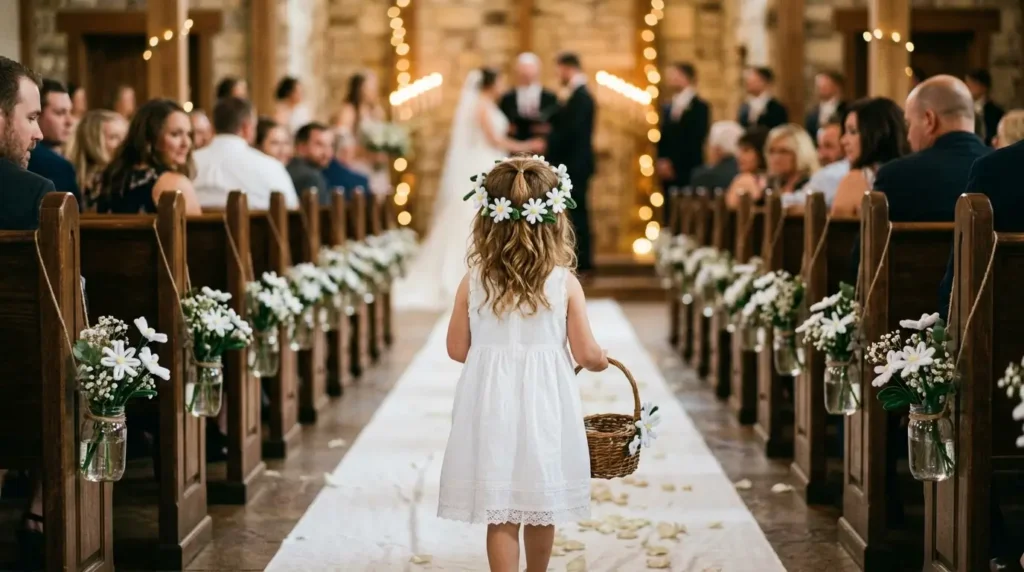
Flower girl crown
A white pipe cleaner flower crown is one of the most beautiful accessories a flower girl can wear. Unlike a real flower crown that wilts during the ceremony, a pipe cleaner crown looks perfect from the moment she puts it on until the last dance.
What to make: 8–10 small white flowers — a mix of tiny roses, cherry blossoms and wildflowers. Base ring sized to fit the flower girl’s head exactly.
Full crown assembly tutorial in our pipe cleaner flower crown guide.
Tip: Make the crown 2 weeks before the wedding and try it on the flower girl to check fit. Adjust the base ring if needed.
Bridesmaid hair accessories
Individual white pipe cleaner flowers attached to a hair clip or bobby pin make beautiful bridesmaid hair accessories. One rose or two small blossoms per clip. Attach with a small drop of craft glue — the only time glue is genuinely useful in pipe cleaner crafting.
Aisle jar decorations
Small glass jars or bud vases placed on each pew end or along the aisle edges, each containing 2–3 white pipe cleaner flowers.
Per jar: 1 white rose + 1 cherry blossom + 1 lavender sprig. Total: 3 flowers per jar. For 20 aisle jars: 60 flowers + 20 jars. Cost: under $15 total.
Display: Fill each jar with white sand and push stems in. The white sand anchors the flowers and photographs beautifully through the clear glass.
Welcome Table & Ceremony Backdrop
Welcome table arrangement
A large, full arrangement on the welcome table — the first thing guests see when they arrive. Use the same flowers as the centerpieces but in a wider, more generous arrangement in a larger vase or terracotta pot.
15–20 flowers in a large white ceramic urn or terracotta pot painted white. Add a handwritten welcome sign leaning beside it.
DIY ceremony backdrop flowers
For a photo booth or ceremony backdrop, attach pipe cleaner flowers directly to a wooden frame, fabric panel or garden arch.
Method: Make flowers with long stems (30+ cm). Twist stems around the frame wire or weave them through a fabric panel. Mix white roses, cherry blossoms and greenery for a lush, full coverage effect.
For more wall-mounting techniques see our pipe cleaner flower wall decoration guide.
After the Wedding — What to Do With Your Flowers
This is where pipe cleaner wedding flowers become something truly special.
The bridal bouquet → display permanently in the bedroom in a slim vase. A keepsake that looks as beautiful on your 10th anniversary as it did on your wedding day.
The centerpieces → distribute to guests as take-home gifts at the end of the reception. Alternatively, keep one for each room in your home.
The flower girl crown → frame it or display it on a shelf in the child’s bedroom as a keepsake.
The place setting flowers → guests take them home. Many will display them for years.
Table arrangements → repurpose as home decorations. See our bedroom decor pipe cleaner flowers guide and small pipe cleaner flower arrangements for home decor for display ideas.
Budget Breakdown
Here’s the honest cost comparison:
| Item | Professional Florist | Pipe Cleaner DIY |
|---|---|---|
| Bridal bouquet | $200–400 | $8–12 |
| 10 table centerpieces | $800–1500 | $30–40 |
| Flower girl crown | $50–100 | $2–3 |
| Aisle decorations (20) | $200–400 | $8–12 |
| Bridesmaid bouquets (3) | $150–300 | $15–20 |
| Total | $1,400–2,700 | $63–87 |
Saving: $1,300–2,600 — enough to fund a significant portion of the honeymoon.
Frequently Asked Questions
Are pipe cleaner wedding flowers realistic enough for photos?
Yes. In wedding photography — which typically uses soft, warm lighting and shallow depth of field — pipe cleaner flowers photograph beautifully. The fuzzy texture of pipe cleaners actually photographs very similarly to real petals in soft focus. Many wedding guests genuinely cannot tell from photos that the flowers are handmade.
How long does it take to make all the wedding flowers?
A complete wedding flower setup for 10 tables + bridal bouquet + flower girl crowns + aisle decorations requires approximately 20–30 hours of making time total. Spread across 6–8 weeks of evening sessions, this is very manageable — about 3–4 hours per week.
Can I make pipe cleaner wedding flowers without any craft experience?
Yes. The core wedding flowers — roses, tulips, cherry blossoms and lavender — are all beginner-friendly. The rose takes 5 minutes to learn. The tulip takes 2 minutes. The lavender takes 3 minutes. Most people are making confident, beautiful flowers within their first 30-minute session.
What is the best color for pipe cleaner wedding flowers?
Pure white is the most versatile and universally appropriate for weddings. Ivory or cream adds warmth. Blush pink is popular for spring and summer weddings. All three look elegant and photograph beautifully.
How do I make pipe cleaner flowers look more realistic for a wedding?
Use the double-layer technique for roses (two coils, one inside the other). Vary stem lengths by 3–5 cm within each arrangement. Add large green leaves to every stem. Mix 2–3 slightly different white and ivory shades rather than using pure white for everything. These four details make the difference between "craft project" and "professional arrangement."
Can pipe cleaner wedding flowers be used outdoors?
Yes. Unlike real flowers that wilt in heat or wind, pipe cleaner flowers are unaffected by outdoor conditions. They won’t droop in sun or humidity, and a gentle breeze won’t damage them. Keep them away from water if possible — pipe cleaners can absorb moisture and lose their shape if soaked.
Final Thoughts
A wedding is one of the most photographed days of your life. The flowers in those photos matter — and they will be looked at for decades.
Pipe cleaner wedding flowers give you complete creative control over what those flowers look like, at a fraction of what a florist would charge, resulting in something that lasts long after every real flower has faded.
The making of them is also something many couples and families remember as fondly as the wedding itself. An evening around a table making flowers together, while talking about the day ahead — that’s not just wedding preparation. That’s the beginning of the story.
Happy crafting — from My Flower Decor! 💒
Save to Pinterest and inspire a future bride! 📌
More guides you’ll love:
- Pipe cleaner rose – step-by-step tutorial
- Pipe cleaner tulip – spring craft
- Lavender pipe cleaner flowers – easy guide
- Pipe cleaner flower crown – DIY tutorial
- Pipe cleaner daisy flower – easy guide
- Pipe cleaner flower bouquet ideas – 50+ designs
- Pipe cleaner flower wall decoration
- Small pipe cleaner flower arrangements for home decor